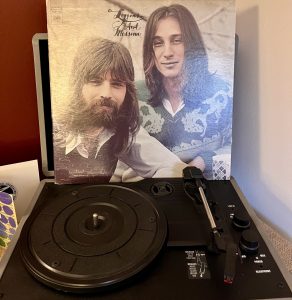
If you have read my blogs, you will likely know that I find nuggets of reflection often buried within song lyrics. Sometimes I will have known the lyrics for years, even decades, before they strike a chord in a very different way. Angry Eyes, released in 1972 by Loggins and Messina, is the latest song to have that effect.
The line, which occurs very late in a long and somewhat unique song, that made me stop and ponder is, “You and I must start to realize blindness binds us together in a false disguise.” A song about anger and confrontation turns it into something even more uncomfortable: an examination of how we can become bound together by the very blindness that keeps us divided and our inability to see one another clearly.
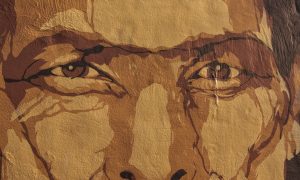
What spurred me on to finish the blog was doing a recent podcast on prior material titled “See the Person, Not the Label.” That podcast fits in perfectly with this idea of blindness and disguise. Blindness which can become institutional and generational. Seeing race rather than individual character, economic status rather than individual circumstances, educational background rather than ability or potential, and finally social class rather than shared humanity.
The song lyrics point to something theologically real: two people can be emotionally close, even devoted to one another, and still be bound together by shared blindness. This can happen in relationships, friendships, families, and communities. It’s comfortable to agree, to not challenge one another, to let things go unspoken — but that kind of peace is a counterfeit peace. St. Paul warns against it sharply: “Do not be conformed to this world but be transformed by the renewal of your mind” (Romans 12:2).
A friendship or relationship that avoids hard truths to preserve harmony isn’t altruism — it’s a kind of mutual coddling. Blessed John Henry Newman wrote powerfully about real conversion, real friendship, and real faith demanding the scales fall from our eyes, even when the light is uncomfortable.
In John 9, when Jesus heals the man born blind, He makes this stunning declaration: “I came into this world for judgment, so that those who do not see might see, and those who do see might become blind” (John 9:39). The Pharisees thought they saw clearly — they were bound together by religious solidarity — but their “sight” was a false disguise that kept them from recognizing the Messiah standing before them.
There’s also a deeper spiritual dimension here: the disguise is Satan’s preferred strategy. He doesn’t usually appear as a monster — he appears as something plausible, even noble. He binds us together in causes, ideologies, relationships, and habits that feel meaningful but are oriented away from God. The false disguise is precisely that — it wears the face of connection while masking isolation from Truth.
We usually think of blindness as something which would separate people. But the song suggests it can become the very thing that keeps us connected in conflict. We can become trapped in the same destructive loop, reacting to the other’s hostility, convinced of our own righteousness, and each reinforcing the other’s anger. The disguise then becomes the protective image we construct for ourselves. We see our own anger as justified, our own actions as reasonable, and the other person’s actions as evidence of their lack of character.
Consider how this pattern can operate in relationships, a family, a workplace, or a political argument. We believe the other person is unreasonable. We interpret their words and actions through that belief. We respond in ways that make the other person defensive or angry. Their reaction reinforces our original judgment; the problem is entirely on their side.
The other person may genuinely have acted wrongly. But our failing to recognize another person’s motives, refusing to acknowledge our own contribution to a conflict, or becoming so convinced that we’re right that we no longer consider the possibility that we’re wrong contributes to the damage.
The song leaves us with an uncomfortable possibility: sometimes the very thing we believe separates us from another person—our certainty that we see the truth and they don’t—is the thing that keeps us bound together in misunderstanding. We operate with an unwillingness to question our own assumptions, acknowledge our own shortcomings, or consider that the other side might have something worthwhile to say. Consider the irony, we can be divided by what we believe while simultaneously being united by what we fail to see.
There is a natural connection to Jesus’ teaching in Matthew 7:3–5, where He challenges people who focus on the speck in another person’s eye while overlooking the plank in their own. We can become experts at identifying what is wrong with someone else while remaining remarkably unexamined ourselves. Jesus isn’t saying we should never recognize another person’s faults. He is challenging the blindness that makes us quick to judge others and slow to examine our own hearts.
Politically we have become increasingly accustomed to defining ourselves by which side we’re on. Each side sees the other as a threat to the country and believes it is defending fairness, dignity, or justice. Then each side dismisses information that challenges its position while failing to recognize how their own assumptions contribute to the division. Both can become so invested in proving the other wrong that they lose sight of the bigger picture. The false disguise is when we mask our own unwillingness to listen as a commitment to principle. The greater tragedy is that while we are busy fighting each other, important problems that require cooperation remain unresolved.
Social media has created an interesting form of collective blindness. We have access to more information than any generation in history, yet access to information isn’t the same as intelligence. Algorithms often reinforce what we already believe. We blindly follow others who think like us, read opinions that validate our positions, and share information that supports our conclusions. We confuse popularity with truth. We confuse having an opinion with having knowledge. We tell ourselves we’re informed because we’re constantly consuming information. We mistake having an explanation for having an understanding. A society that wants to solve difficult problems must be willing to look beyond convenient explanations.
Blindness isn’t always intentional. We tend to associate blindness with ignorance or deliberate avoidance. But sometimes the most intelligent, educated, well-intentioned people are the ones who become most convinced they already see things clearly. We can be blind because we don’t know what we don’t know; we don’t want to know what challenges our beliefs; we are afraid that acknowledging the truth might require us to change; and we have surrounded ourselves with people who reinforce what we already believe. In today’s world it is easy to create an environment in which no one challenges each other, everyone feels validated, and the collective blindness becomes mistaken for collective wisdom.
We don’t have to agree with one another or abandon our convictions. But we do have to be willing to recognize that our vision may not be as clear as we think it is. Because the moment we believe we have nothing left to learn, nothing left to reconsider, and nothing left to examine about ourselves, we have become just as blind as the people we criticize.
And perhaps the first step toward a better society isn’t getting everyone else to see things our way. Perhaps it’s being willing to open our own eyes.